
ARTICLE
Finding Strength Within: Sabina Renck on Self-Defense and Empowerment
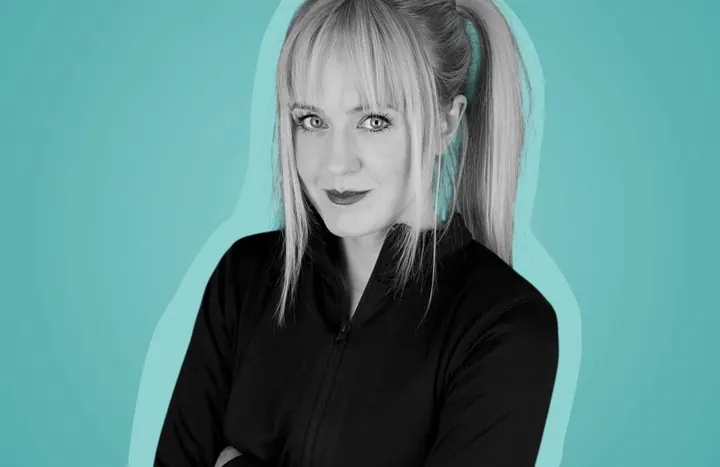
Meet Sabina Renck
Sabina Renck has been training Krav Maga since 2016 across Sweden, New Zealand, Norway, and Denmark. She teaches women's self-defense at Göteborgs Krav Maga Klubb and leads courses for schools, universities, and companies. She also works in film through Renck Productions and as a group fitness instructor specializing in strength training. We sat down with Sabina to discuss her journey into Krav Maga and why empowering women matters so much to her.
What Made You Start Krav Maga?
Sabina's path came from a moment of vulnerability. Late one evening, while out with her boyfriend, a drunk man approached them. "Completely instinctively, I stepped in front of my boyfriend like a 'meat shield,'" she recalls. "But I didn't really have the tools or knowledge to handle a threatening situation." Though the man only asked for directions, it changed her. "I realized the situation could have turned out very differently. I wanted to start training self-defense seriously—not just
to have the willingness to act, but the ability and tools to do it." When she discovered Krav Maga, she was immediately drawn to it. "It looked effective, direct, and incredibly empowering. The focus is not on perfect techniques or 'winning a fight,' but on creating an opportunity to get away safely. That reality-based approach resonated with me immediately."
How Self-Defense Changes You
Krav Maga transformed Sabina in ways far beyond physical skills. "It's given me confidence, mental strength, a community, and a sense of security in how I carry myself in everyday life," she shares. "It's not about being the biggest or strongest person, but about mindset, determination, and using what you have." She emphasizes an important distinction: "Self-defense is not about blaming yourself for violence committed against you. The responsibility always lies with the perpetrator. It's about giving yourself
tools and taking control over what you can control—your own ability to act." Many women grow up being taught to be nice and accommodating, even when their instincts scream otherwise. "We're often taught not to take up space or make a scene. In certain situations, that can become directly dangerous," Sabina explains. "I wish more women discovered what they're capable of and practiced using their voice, body language, and physical self-defense."
What Safety Means
Safety, for Sabina, is about agency and preparation. "Self-defense is never a guarantee, but for me, it's about increasing my chances of handling a confrontational situation and being able to protect the people around me if necessary. Protecting others has always been a natural instinct for me." She wants women to understand that "you don't need to be strong or athletic to defend yourself. Yes, women are generally smaller with less muscle mass than men, but self-defense is
about mindset, timing, and using what you have effectively. There's enormous strength in knowing you're allowed to fight for yourself and set boundaries."
Dispelling the Myths
Sabina quickly corrects common misconceptions. "One myth is that self-defense is only about fighting or overpowering someone stronger. It's really about creating an opportunity to get away and daring to act when something feels wrong." She also addresses the paranoia concern: "I'm not paranoid for wearing a seatbelt in my car. Self-defense is the same—it's about being prepared, not walking around afraid." Many believe you need to be aggressive to train self-defense. "Women have spent their whole lives
learning to make themselves smaller. Self-defense challenges that. It's about giving yourself permission to take up space and prioritize your own safety." -
Trust Your Intuition
. Always! When something feels wrong, trust it. "So many of us rationalize uncomfortable signals away and doubt ourselves before doubting someone else," Sabina explains. "But intuition picks up on threatening signals long before we can put them into words." She highlights subtle manipulation tactics like "forced teaming," where someone creates a false sense of connection: "It sounds innocent-'Shouldn't we stand under that roof? We're getting soaked.'-but suddenly you feel connected and can't walk away." Another tactic is
unsolicited promises: "A stranger says, 'I'll just help you carry your groceries, I promise.' But why promise something that should be obvious? It's making you relax when you're becoming suspicious." Her advice is clear: "Give yourself permission to trust that feeling, say no, and leave without feeling like you have to be polite. Your safety is more important than being perceived as nice." -
Witnessing the Transformation
"Many women walk into the room nervous or insecure, and within an hour they're roaring back like Valkyries," Sabina shares. "I hear: 'I didn't even know my voice and body were capable of this.'" The impact is real and lasting. One participant emailed that she'd raised her voice at a threatening man in a park and he walked away. "She said she never would have dared before the course. That's what it's about-women becoming more action-oriented and trusting
themselves." Participants carry this forward. "Many begin to take up more space and feel more confident setting boundaries in other areas of life. There's something powerful about doing this together with other women, you realize you're not alone in your fears." -
What Sabina Hopes You Take Away
"I hope women feel stronger, safer, and more prepared-not more afraid," she says. "I hope they leave knowing that their voice, intuition, and boundaries matter. Above all, I hope they feel a greater sense of their own strength and capability." Sabina Renck teaches women's self-defense at Göteborgs Krav Maga Klubb. Her message is simple: your safety matters, your voice matters, and you are stronger than you think.
Keep Spher close.
Want safety tools and a women-first community in one app? Download Spher free.